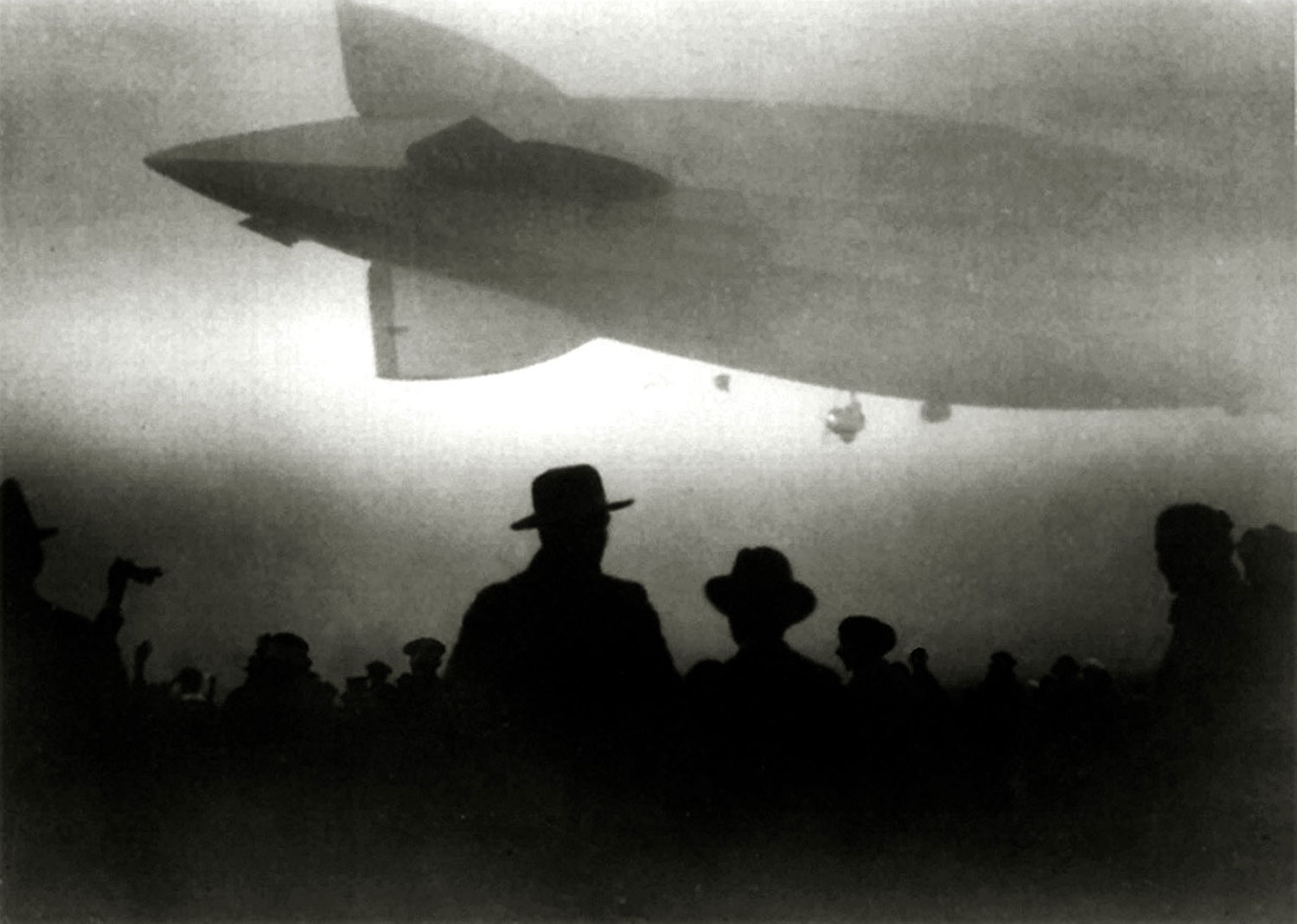
The LZ-126 departing Friedrichshafen, Germany on October 12, 1924 for its flight across the Atlantic. Upon its arrival in Lakehurst, New Jersey, the ship entered the United States Navy as ZR-3 USS Los Angeles.
The LZ-126 departing Friedrichshafen, Germany on October 12, 1924 for its flight across the Atlantic. Upon its arrival in Lakehurst, New Jersey, the ship entered the United States Navy as ZR-3 USS Los Angeles.


Another “thank you” for this wonderful site. I have really enjoyed it.
Fabulous site. I discovered airships.net while doing back-ground research on a medal I recently won at auction. The medal was struck in 1928 to commemorate the dedication of the LZ-127. Only after visiting your site did I learn the LZ-127 was more commonly known as the Graf Zeppelin.
I found it very interesting to learn that more than half of the Zeppelin operating budget at one point was derived from stamp collectors sending covers etc via airmail. Do you have any information regarding the sale or distribution of German medals, or even more sginificantly, the striking of German 3 Mark and 5 Mark coins?
I have done some free-lance writing for Numismatic News. The thought ran through my mind of writing an article about Zeppelin coins and their relationship (if any) to the actual enterprise.
Thanks in advance for any additional information.
Thank you for your comment!
I don’t recall reading about any portion of the 3 or 5 mark Graf Zeppelin coins being given to the the Zeppelin Company (the LZ), and such an arrangement would not seem to make economic sense, unless of course the government was hoping to make additional seignorage income from coins which would be saved rather than entering circulation. I will defer to numismatic historians to shed any additional light, and I would be interested to learn more about the topic myself.
The case of postal revenue is quite different, of course, since the LZ (and later the DZR) was being paid for a service it rendered — the carriage of mail. The company negotiated contracts with postal authorities under which it was paid according to the volume of mail it carried, and these types of mail contracts provided an important subsidy for almost all early commercial aviation ventures.
Thank you for this great website! I’m really having fun with it.