Hindenburg was scheduled to land at Lakehurst, NJ at 6:00 AM on May 6, 1937, after her first North Atlantic crossing of the 1937 season. But delayed 12 hours by headwinds, the ship was over Seal Island, Nova Scotia; when passengers were supposed to be disembarking they were gathering for breakfast instead.
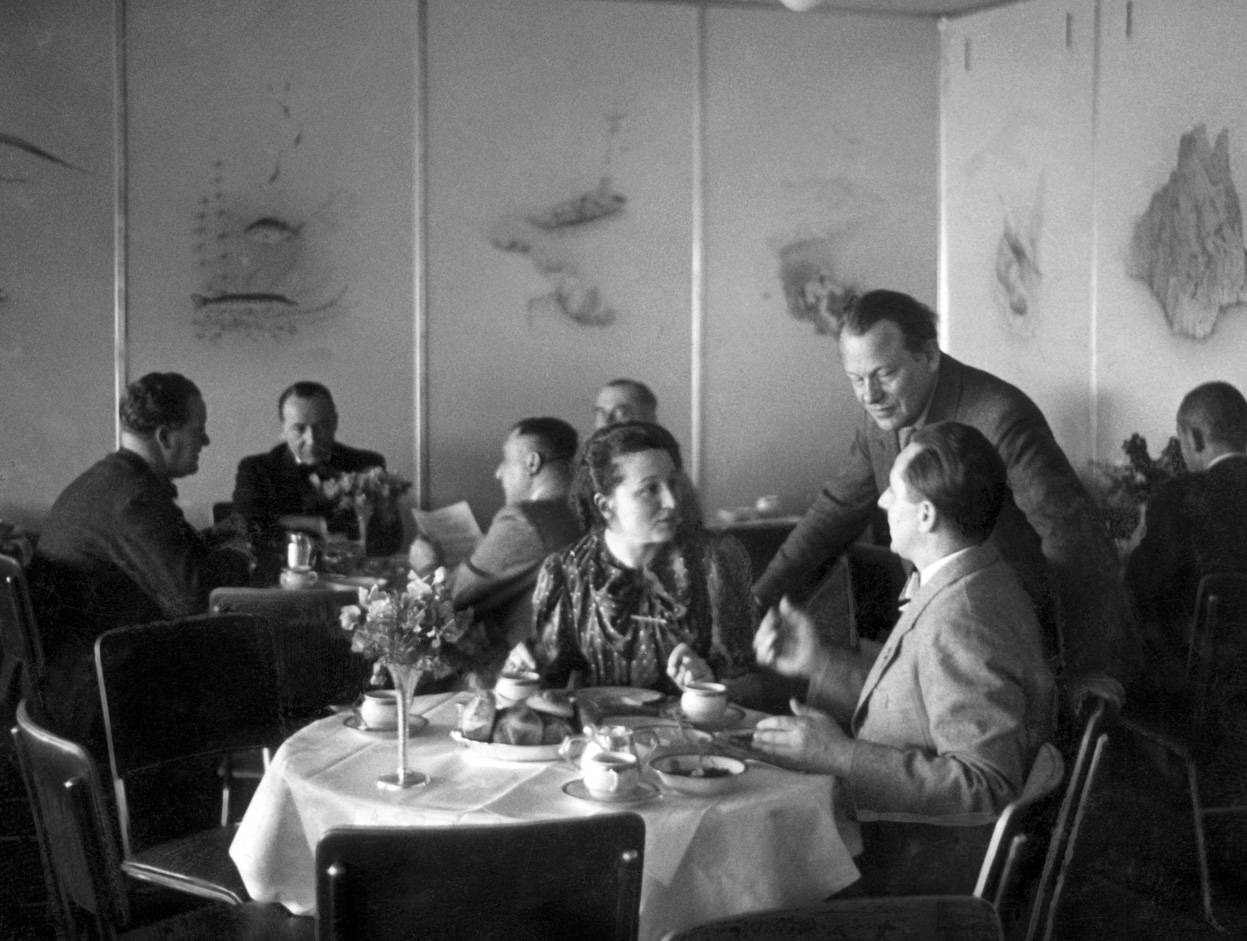
Dining Room of LZ-129 Hindenburg
Just before noon the ship was over Boston.
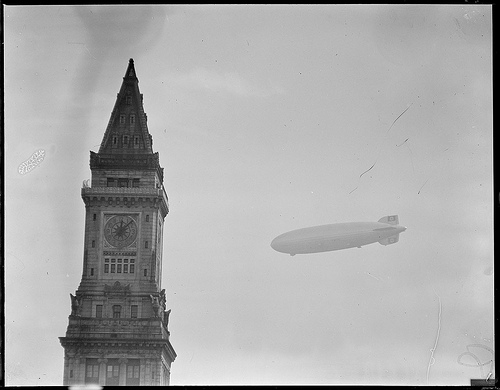
Hindenburg over Boston Customs House
At 3:00 pm Hindenburg’s passengers and crew were enjoying New York’s famous skyline from the air.
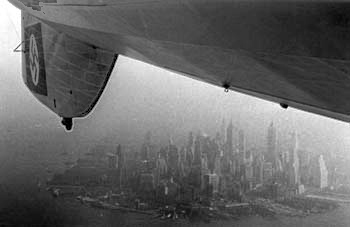
Photograph of New York City taken by Hindenburg mechanic Robert Moser from his engine car.
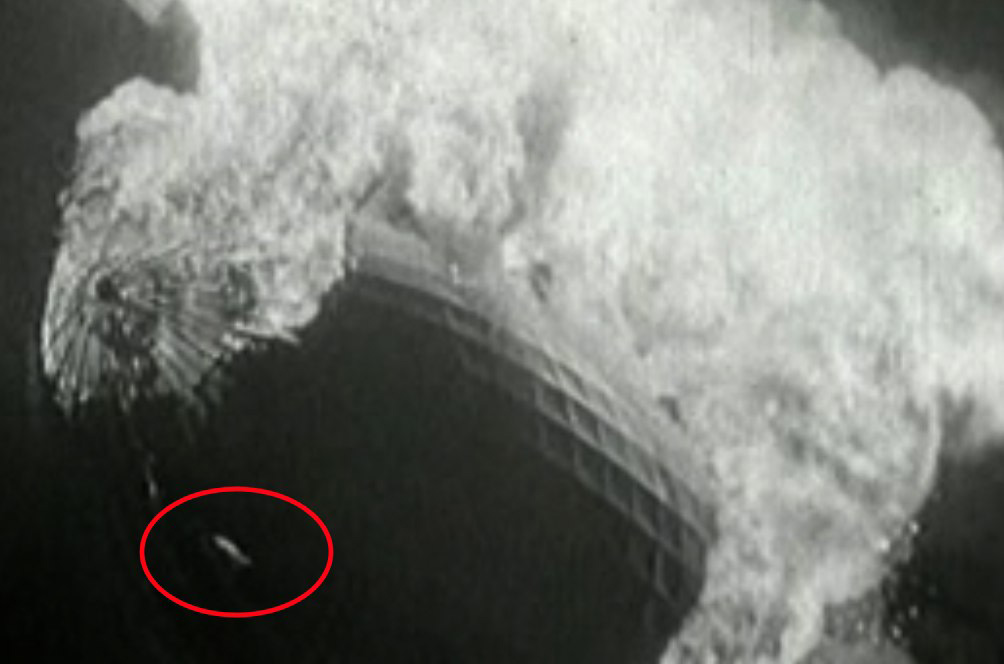
Just a few hours later 36 people were dead and the world’s greatest airship no longer existed.
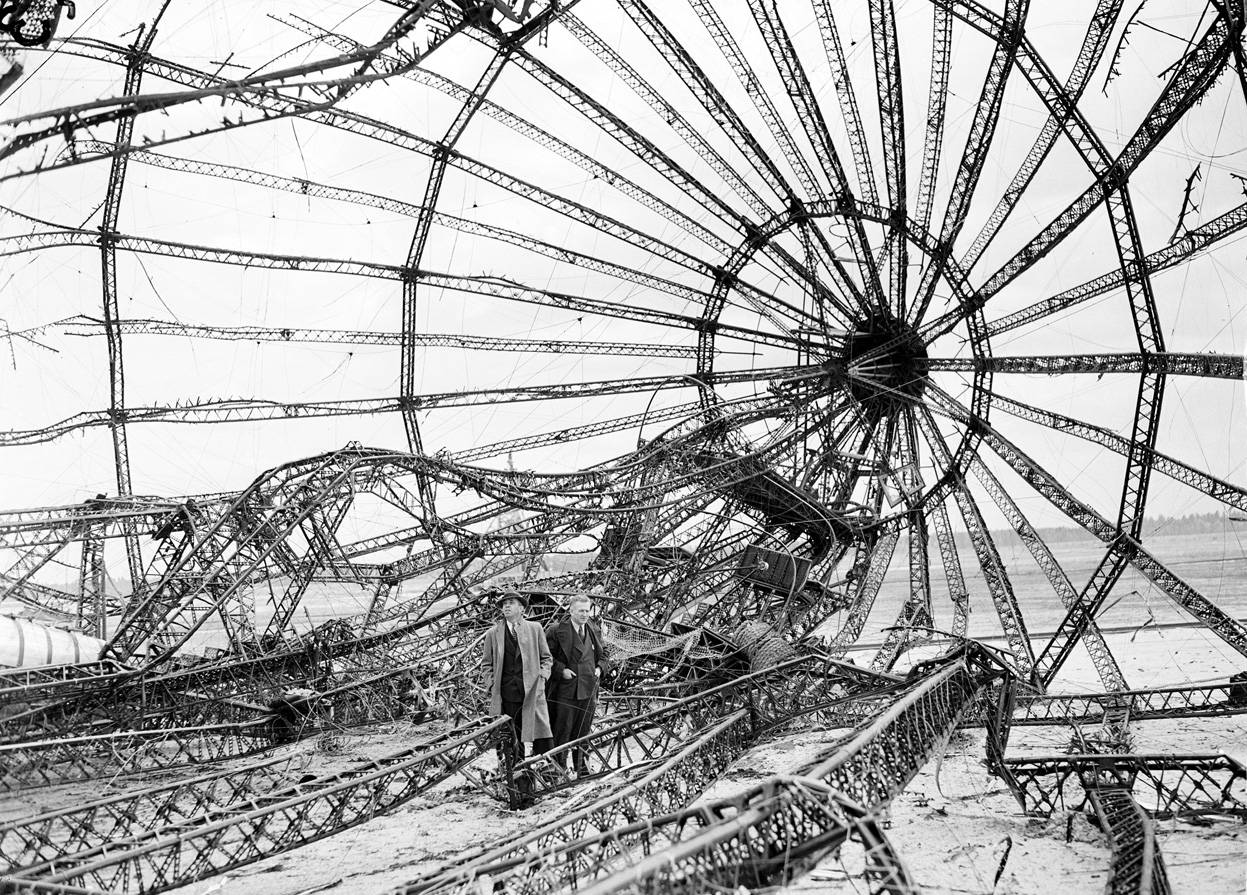
Wreckage of LZ-129 Hindenburg. May 6, 1937.
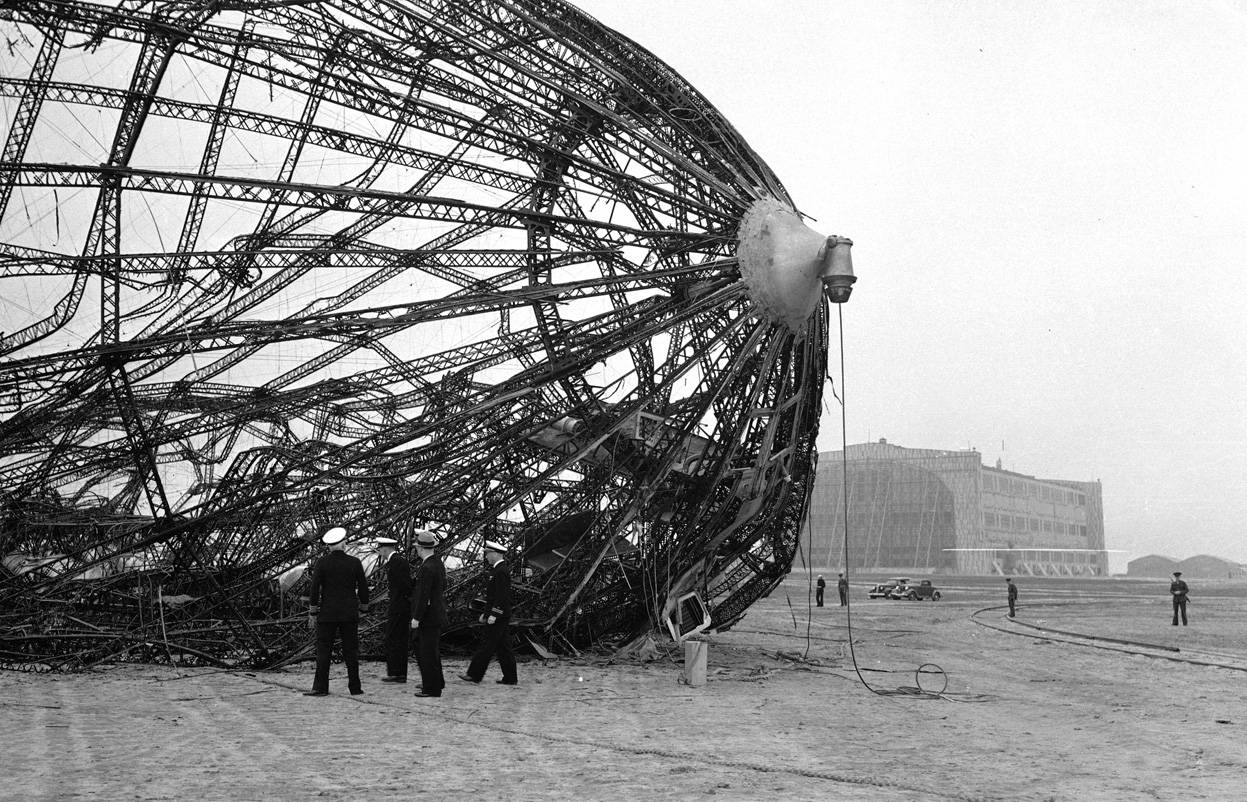
Wreckage of LZ-129 Hindenburg. May 6, 1937.
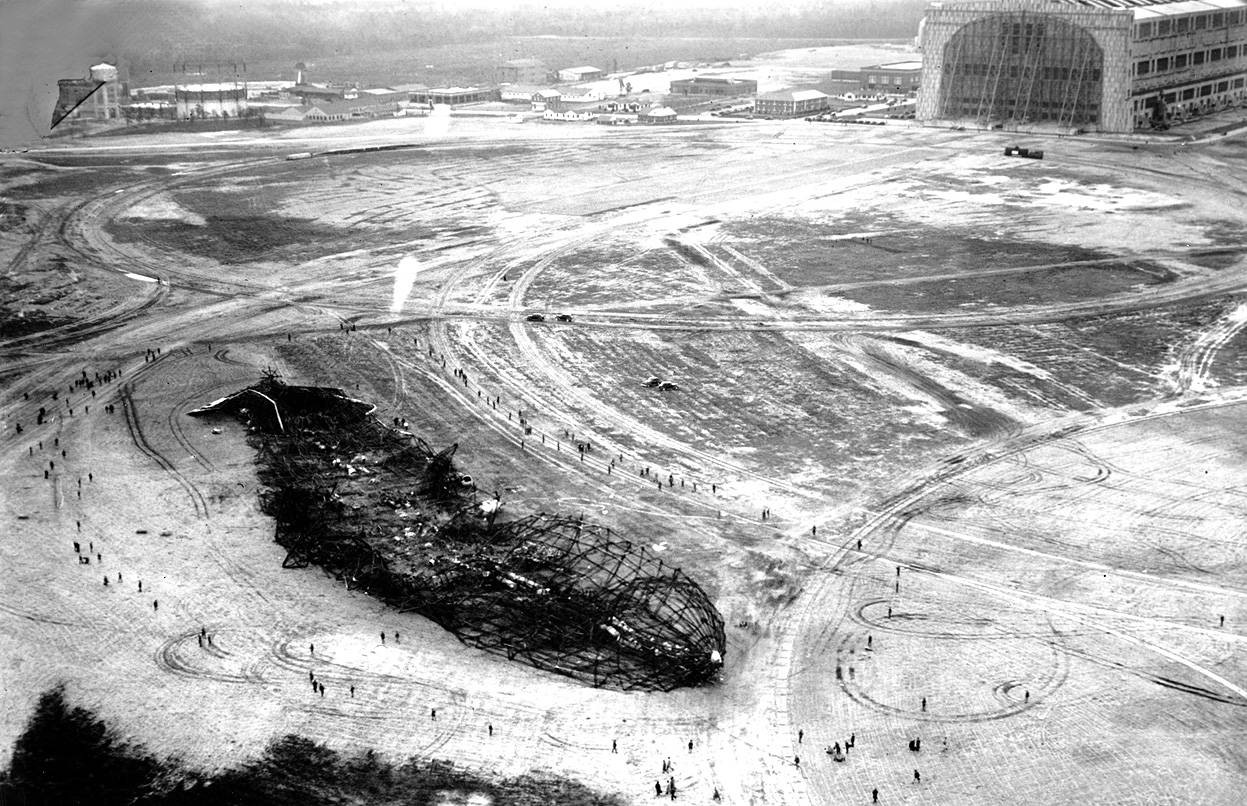
Wreckage of LZ-129 Hindenburg. May 6, 1937.
Today is the 77th anniversary of the disaster that ended the age of the passenger airship.



I have studied the background of the Zepplen business and believe the company
was getting ready to move to South America to get away from Hermann Goering’s iinfluence. So, an infernal devce was planted in the Hindenburg to eliminate the aura of safety with Hydrogen and create a period of suspension in the airline’s operation. The Nazi control then took over, and the rest is hisory.
If not for that, there would probably be some airship traffic today.
i believe
When Dan said that the Hindenburg disaster “ended the age of the passenger airship,†I assume he meant the end of regularly-scheduled, fare-paying passenger service. But that did not, by itself, end “the age of the airship†per se because at least one more airship later appeared overhead in the skies of Germany, with passengers aboard, albeit not paying passengers.
On September 14, 1938, a little more than a year after Lakehurst, Hugo Eckener christened the LZ 130 Graf Zeppelin II with a bottle of liquid air and, with himself in command, launched onto the craft’s maiden flight. With seventy-four souls on board (crew and passengers), the LZ 130 flew to Munich, Augsburg, and Ulm before returning to Friedrichshafen. Two weeks later, on September 28, the ship passed a milestone when it went off on a proving flight under the command of Captain Albert Sammt, the very same commander who had acted as first officer on the final flight of the Hindenburg, and who had suffered extensive burns in the process. Nevertheless, Sammt had no qualms about flying the hydrogen-filled craft even through thunderstorms, which, for test purposes, he did repeatedly. In fact, with one exception, Sammt would command every subsequent flight of the ship, including a spy run over the coast of England and a propaganda flight over the Sudetenland, during which crewmembers dropped swastika flags and leaflets and blasted patriotic music to the masses below, just as in the days of the Plebiscite flights of the old Graf and the Hindenburg in 1936.
For me, “the age of the airship†ended on May 6, 1940, exactly three years to the day after the Hindenburg fire, when, on Goering’s orders, the two remaining zeppelin hangars at Frankfurt were dynamited. At that point, under any interpretation, the airship really was dead and gone.
Thanks for the remembrance Dan. I would like to offer an alternate conclusion to this epitaph. After the loss of the Hindenburg, her management in Germany still operated the new Graf Zeppelin -2 airship albeit for regional flights that were disguised as scenic jaunts but were actually electronic warfare espionage missions. When Germany’s air marshal determined that both the old and new Graf Zeppelins were no longer useful to his wartime planning, he had them cut down for scrap to build warplanes from.
So in partial truth, it was the second world war that ended passenger airship service.
Except, of course, that the LZ 130 never carried a fare-paying passenger.
Passenger airship service actually ended on May 8, 1937, when the LZ 127 Graf Zeppelin landed at Friedrichshafen after a flight back from South America. Over the objections of her commander, Hans von Schiller, her next scheduled passenger flight was canceled due to the Hindenburg catastrophe, and she never resumed passenger service.
No insurance company would underwrite passenger operations for either the LZ 127 or the LZ 130 as long as they used hydrogen as their lifting gas. And, of course, no insurance, no passenger service.
The passenger airship was finished long before Goering ordered the 127 and the 130 to be dismantled.