Video of this morning’s Airlander incident:
I have some additional information from sources at Cardington and elsewhere that I will post when, and if, permitted to discuss publicly.
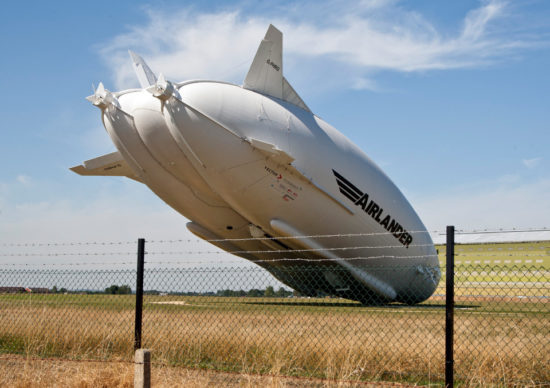
Video of this morning’s Airlander incident:
I have some additional information from sources at Cardington and elsewhere that I will post when, and if, permitted to discuss publicly.
Re:
<>
It is relevant here to recall the crash of Asiana Airlines flight 214 at KSFO in July 2013. Video of the crash shows the airliner rotating about 330 degrees in the air, while sharply angled with respect to the ground, after striking the seawall short of the runway threshold. There were 307 souls on board, and only three individuals died. The captain and first officer indeed walked away from the aircraft.
https://en.wikipedia.org/wiki/Asiana_Airlines_Flight_214
This is not the only such incident in modern civil aviation.
As a long term UK aviation nut, gliding instructor drone flier and having a lifetime fascination with airships, I find it very sad that reports of the Airlander incident on it’s second test flight sensationalised it as a crash, with almost every media report linking it back to the Hindenburg disaster. In fact the Airlander for whatever reason, made a low impact, minor damage, nose down contact with the ground after a successful second test flight of nearly two hours. Even one of the BBC main news bulletins questioned the future of the new breed of airship after this ‘crash’. Why is this, after the numerous fatal crashes of ‘safe’ airliners over the last year with nobody questioning the future of conventional air travel? How many prototype aircraft have been destroyed completely in early test flights with fatal results and barely a mention in the media? If anything, the incident with the Airlander is a testimony to the safety of airship travel, as we know what the consequences would have been of an airliner touching down with a 20 degree nose down angle. You certainly wouldn’t have seen the pilot scrambling out of the damaged cockpit trying to stabilise the ship!
The fact that the Hindenburg disaster from nearly 80 years ago is so frequently referenced, seems to be a form of media hysteria to frighten everybody away from airships. It seems to have been forgotten that inspite of the horrific raw public spectacle and coverage of the disaster, over 60% of those onboard survived, something unthinkable in a modern air crash. Perhaps if the Hindenburg hadn’t been such a public horror show, airships may have had a highly successful future. The Hindenburg disaster is often compared with that of the Titanic, but the public perception of the Titanic seems to be one of a mix of sadness and curiosity. Perhaps because it was remote and out of site whereas the Hindenburg showed people dying consumed by fire right in front of the worlds press in slow motion.
I also feel sad that so many misguided and ill informed comments are made regarding airships and their future which doesn’t help innovative companies like those working on the Airlander. This is a project that needs support and encouragement to develop an alternative safer and greener form of air transport that offers many advantages over existing alternatives. I really feel that with successful and safe prototype versions flying in a variety of demonstrational roles, it would quickly become evident to potential clients how useful and viable they could be.
There is much talk of a lack of basic infrastructure and support services for airship operations, coupled with the huge expense of building them. I also see huge investment in container handling ports and facilities, airport expansion and alternative energy generating services. The amount of cost to add modern airship handling facilities to many of the underused regional airports around the country would be minimal compared to the returns from an imaginative use of the airship. Minimal noise and air pollution, far simpler and smaller land and infrastructure requirements than conventional aircraft, greater flying safety devoid of the sort of failure risk associated with conventional aircraft. Then of course there is the survivability level likely from any major incident, due to the lack of fire risk, low impact speed, impact absorbency of the structure and most importantly the minimal requirements for aerodynamic lift to remain airborne in the event of power failure. Even the current overcrowded airspace should be of little concern, with airships flying way below the sort of heights used by most air transport.
There are many arguments against airship travel based on susceptibility to meteorological conditions, but we are not comparing airship travel with fixed wing aircraft. Even those with their far higher flying speeds and ability to fly above the weather are still susceptible to high winds and turbulence, with many instances of accidents and near accidents due to turbulence and air movement causing lack of lift during approaches and takeoff. The lift of a fixed wing aircraft is produced by a comparatively small wing area in a small space, so variations in air movement vertically would be far less of a problem for an airship with its vast areas of built in lift. The lower speed of an airship would make it more vulnerable to journey time variations caused by headwinds, but this would be no more of a problem to operators than it would be for operators of ships in bad weather. An airship would not be competing with fixed wing jets for journey time or passenger destination deadlines.
Airship operations would initially be compared with existing fixed wing transportation requirements, but it would become apparent quite quickly that new solutions to existing problems could make use of the airship, alongside improvements in existing operations. It’s not a case of there being no role for the airship, rather that the airship would open up a whole new era of useage possibilities. These could be in the field of exploration, supplies to areas that others can’t reach, emergency aid situations, long term surveillance and monitoring operations, luxury travel and cruising development, emergency hospital facility etc, etc. The list is limitless and a company that wins support both financialyl and publicly, is likely to capitalise on a growth of global interest in a form of transport that is both highly practical, romantic and once the basic infrastructures are in place, likely to be far more economical, safe and green that any other form of transport.
I would love to see the government support the Airlander or similar projects to open up a whole new massive market and exporting opportunities. The amount of money being wasted on the prestige and limited use high speed rail link would be far better invested in something that could put the UK at the forefront of a new transportation system that could have a far reaching future in my opinion.
Roger Gunkel
CORRECTED:
Re: “If anything, the incident with the Airlander is a testimony to the safety of airship travel, as we know what the consequences would have been of an airliner touching down with a 20 degree nose down angle. You certainly wouldn’t have seen the pilot scrambling out of the damaged cockpit trying to stabilise the ship!â€
It is relevant here to remember the crash of Asiana Airlines flight at KSFO in July 2013. Video of the crash shows the airliner rotating about 330 degrees, while sharply angled with respect to the ground, after striking the seawall short of the runway threshold. There were 307 souls on board, and only three individuals died. The captain and first officer walked away from the aircraft.
https://en.wikipedia.org/wiki/Asiana_Airlines_Flight_214
This is not the only such incident in modern civil aviation.